

Camarda started as a specialist at the Langley Research Center. There, he studied thermal structures for hypersonic vehicles. He developed many innovative systems that are actively used in the space industry. In 2005, the scientist realized his most cherished dream. He flew into space as a part of the STS-114 mission. The Queens native became famous as an innovator, scientist, teacher and astronaut. Read more about the path to success of a brilliant and courageous person on queenski.com.
Education
Charles was born on May 8, 1952 in Queens. He showed interest in space flight as a child. To get closer to the opportunity to go into outer space, he decided to enter the appropriate higher education institutions. He received his bachelor’s degree from New York University Tandon School of Engineering, his MD from George Washington University and his PhD from Virginia Polytechnic Institute and State University.
Scientist and inventor
After receiving his BD, he began working as a scientist at NASA’s Langley Research Center. It is the oldest of NASA’s field centers, which focuses on aeronautical research and tests space equipment. He worked in the Thermal Structures Branch, led the High-Speed Research and Reusable Launch Vehicle programs and managed several other facilities.
With access to the equipment and data, he became the author of many innovations and got patents for 9 of them. One of them is the sandwich panel with heat-pipe-cooling. In 1983, Industrial Research Magazine named it one of the 100 best technical innovations. In 1996, the scientist came closer to his dream. He was appointed a space mission specialist. In addition, he taught at his Alma Mater.
In total, Charles wrote more than 60 papers in the various fields of space research.
Conqueror of space
For years, he was a reserve member of the crew of Expedition 8 of the International Space Station (ISS). It is operated in low Earth orbit by five space agencies, belonging to the United States, Canada, Europe, Japan and Russia. The ISS is designed for scientific research in space. It is the largest space station ever built.
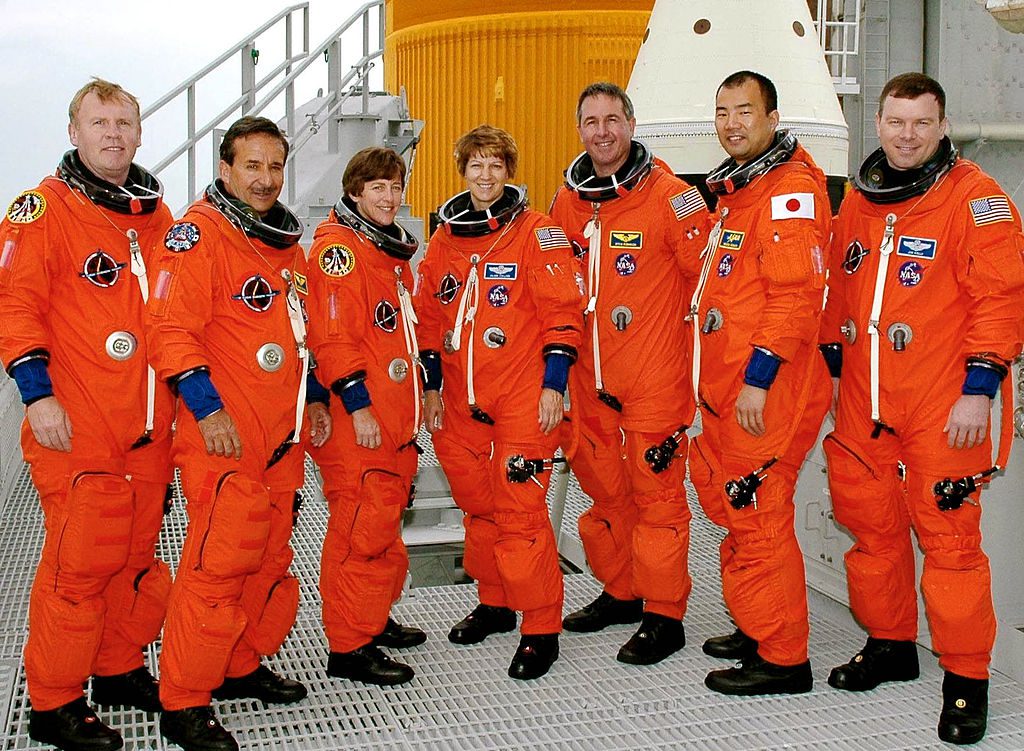
He flew into space on the STS-114 mission (July 26–August 9, 2005). This was the 31st space flight of the reusable transport spacecraft Discovery. That year, it flew into space for the first time after the disaster in 2003. Then, Columbia made a 16-day flight. NASA lost contact with the ship 16 minutes before the intended landing on Earth. All 7 crew members died due to the destruction of the outer thermal insulation layer on the left wing plane of the shuttle. This happened when a piece of thermal insulation from an oxygen tank fell on it during the launch of the ship.
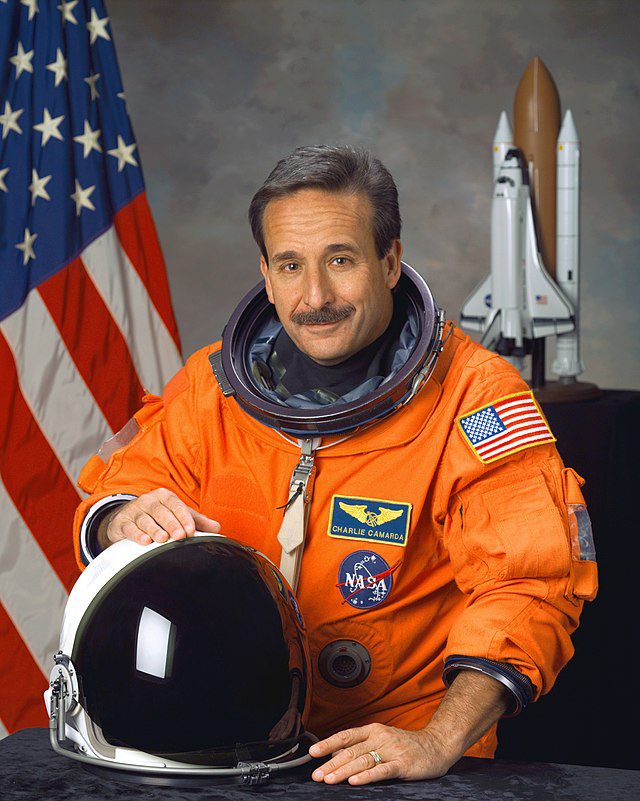
The STS-114 expedition was aimed at testing new shuttle safety systems; delivering food and water to the ISS crew; checking the possibility of repairing damage to the thermal protection of the shuttle wings; replacing the failed gyrodyne; installing the ESP-2 external storage platform on the airlock chamber. Camarda was engaged in diagnosing the cause of the tragedy and determining the possibility of repairing the leading edge of the wing.
Further career
After the successful flight, Charles continued to work at NASA. He was appointed Director of Engineering at the Johnson Space Center and Deputy Director of the NASA Engineering and Safety Center. He retired in May 2019.
For years, he has been working to prevent fatal incidents. He created the Innovative Conceptual Engineering Design (ICED) methodology for training NASA engineers. This methodology has become extremely important when organizing teams whose task is to diagnose the causes of spacecraft and other similar equipment accidents. Using the ICED methodology, specialists have trained students and teachers around the world to help solve technical, as well as business and social problems.
For his achievements, Charles has received more than 20 national and international awards, including the IR-100 Award for one of the top 100 technical innovations, the NASA Space Flight Medal, the NASA Exceptional Service Medal and others.